Table of Contents
Introduction
In a coating production line, Air Operated Diaphragm Pumps (AODD) are often viewed as simple transfer tools. However, with the rise of high-solid coatings, nano-dispersions, and environmentally sensitive solvents, several overlooked “niche” technical points have become critical factors for product quality and operational safety.
1. Adiabatic Expansion and the “Exhaust Condensate Backflow” Trap
While most technicians are aware of “icing” in air pumps, few notice the internal corrosion caused by condensate within the air valve.
- The Niche Detail: As compressed air expands rapidly within the air valve, it creates frost at the exhaust and forms microscopic water droplets inside the valve. In humid water-based paint workshops, this is exacerbated.
- Industry Strategy: Install a membrane dryer at the air inlet rather than a simple water filter. Furthermore, the muffler should be installed horizontally or tilted slightly downward to prevent condensate from draining back into the air distribution system, which causes “sticky valve” syndrome.
2. Valve Ball “Micro-Shear” and Emulsion Breakage
Although AODD pumps are famous for low-shear transfer, the action of the valve balls remains a potential source of shear before the slurry enters the bead mill.
- Industry Challenge: For shear-sensitive emulsions (e.g., styrene-acrylic), the instantaneous compression (micro-shear) between the ball and seat can cause localized polymer precipitation, creating “grit” or “seeds” in the paint.
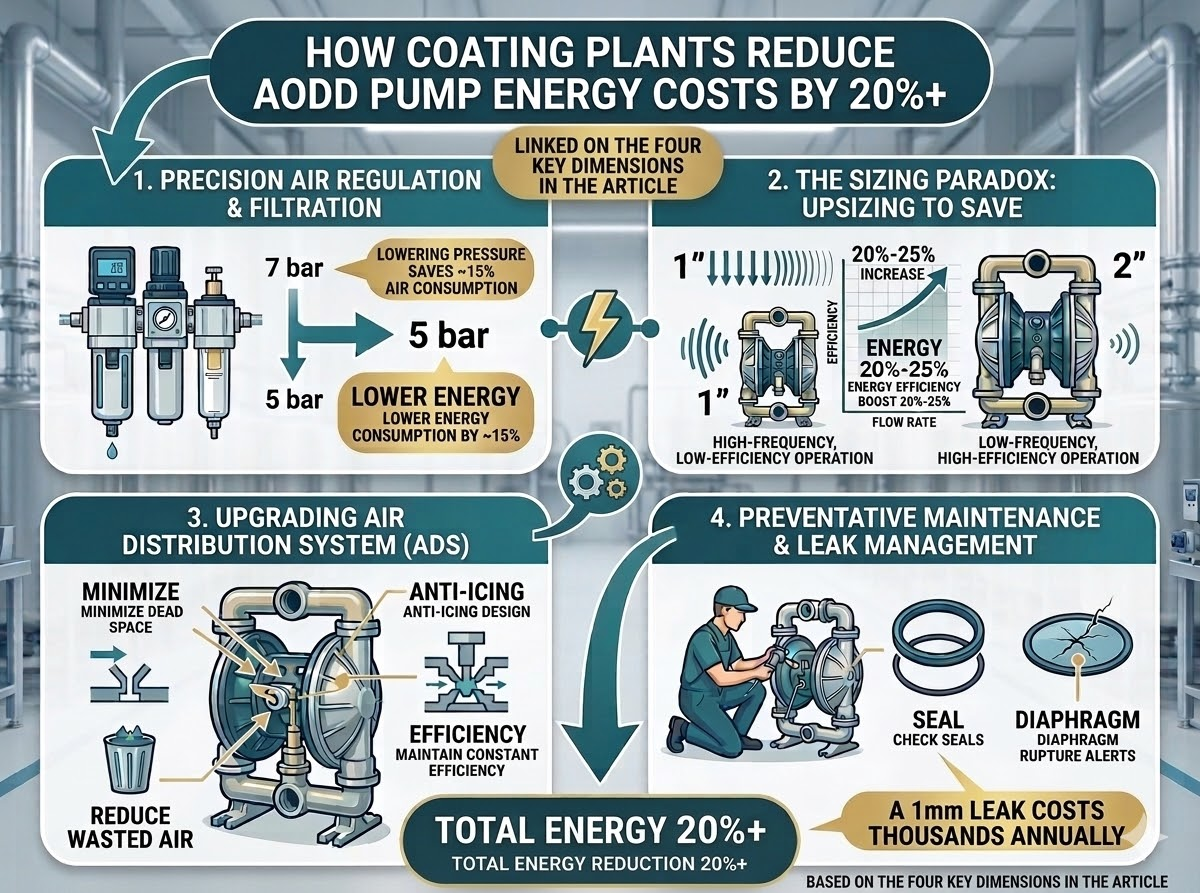
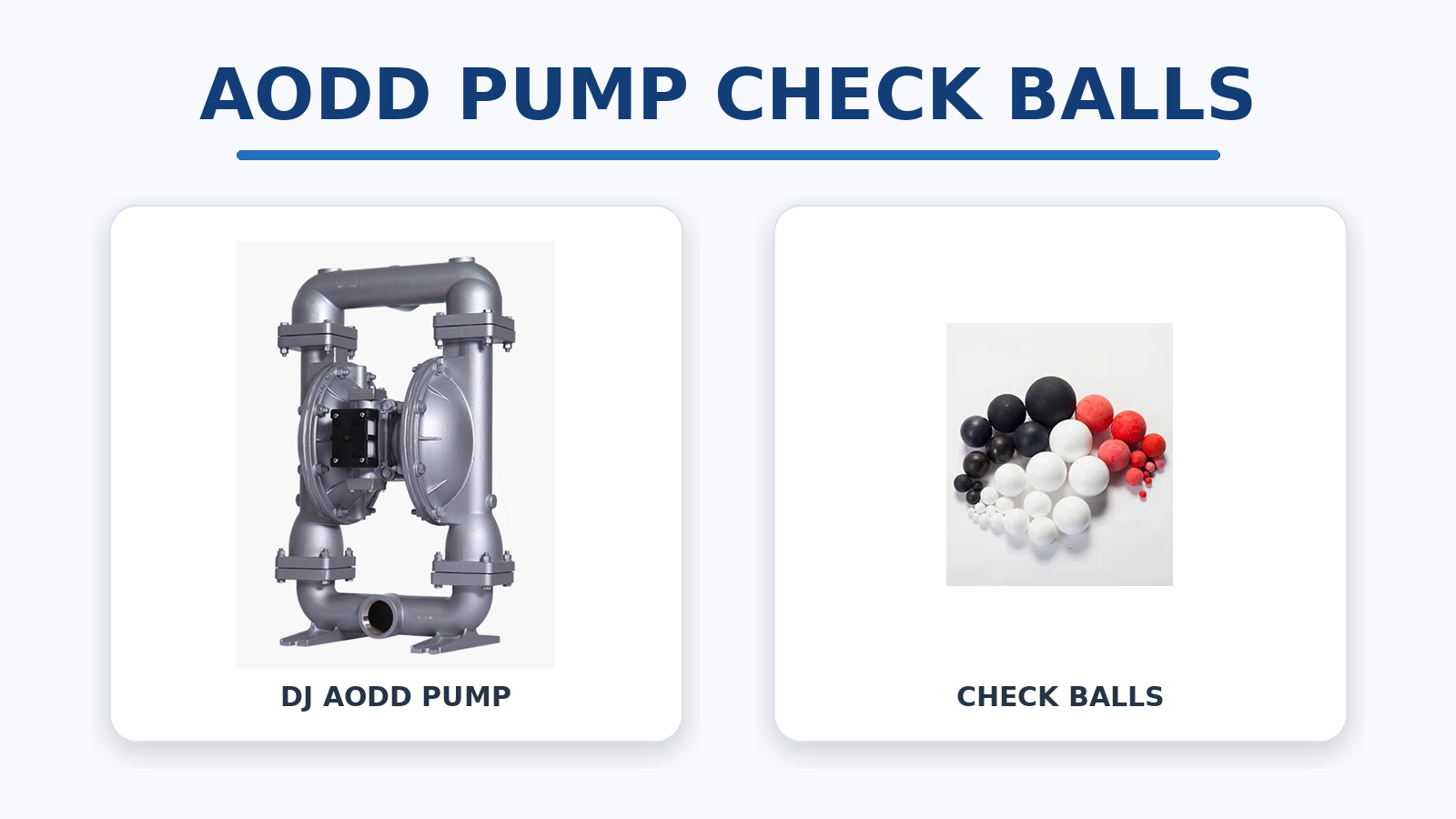
- Technical Advice: Adopt a “Large Pump, Slow Stroke” strategy. For example, running a 2″ pump at 30% capacity protects emulsion stability far better than running a 1″ pump at full load. Additionally, using softer Santoprene valve balls instead of hard PTFE balls can cushion the impact during closure.
3. Solvent Permeation: Moving Beyond “Chemical Resistance”
For solvent-based systems, chemical compatibility charts may show PTFE as resistant to Xylene, but they rarely mention the risk of “permeation.”
- The Niche Point: PTFE is not perfectly non-porous. Certain aggressive solvents (like MEK or Acetone) can permeate through the PTFE film in molecular form, accumulating at the backup diaphragm. This leads to swelling and eventual delamination of the rubber backer.
- Specialized Solution: When handling highly permeative solvents, specify Bonded Diaphragms. These diaphragms are thermally fused (PTFE to rubber), eliminating the air gap where liquid could otherwise accumulate and cause failure.
4. Cavitation and High-Viscosity Rheology
The viscosity of paint slurry changes drastically during the grinding process.
- The Industry Trap: As viscosity increases, the slurry may not flow into the pump as fast as the diaphragm moves, creating cavitation (vacuum bubbles). This damages the diaphragm and introduces micro-bubbles into the coating, leading to pinhole defects in the final film.
- Technical Precaution: The suction pipe diameter must be strictly calculated. In the coating industry, the suction line should typically be one size larger than the pump port (e.g., a 1.5″ pipe for a 1″ pump) to reduce intake velocity and prevent cavitation under high-viscosity conditions.
5. Pigment Sedimentation and “Dead-Zone” Flushing
Pigments like Titanium Dioxide ($TiO_2$) tend to settle during downtime.
- The Niche Detail: Traditional pump manifolds often have “dead zones” beneath the valve seats. If flushing is incomplete, dried pigment chunks can scratch the diaphragm or jam the valve balls during the next startup.
- Technical Trend: Modern high-performance pumps now feature “Bottom Discharge” designs or streamlined internal chambers. During installation, ensure the pump is at the lowest point of the piping system and integrate an automated flushing cycle into the PLC logic.
Conclusion
In a coating plant, pump selection goes beyond flow rates and head pressure. Success lies in understanding the physics of compressed air, the micro-shear sensitivity of the fluid, and the permeation dynamics of solvents.